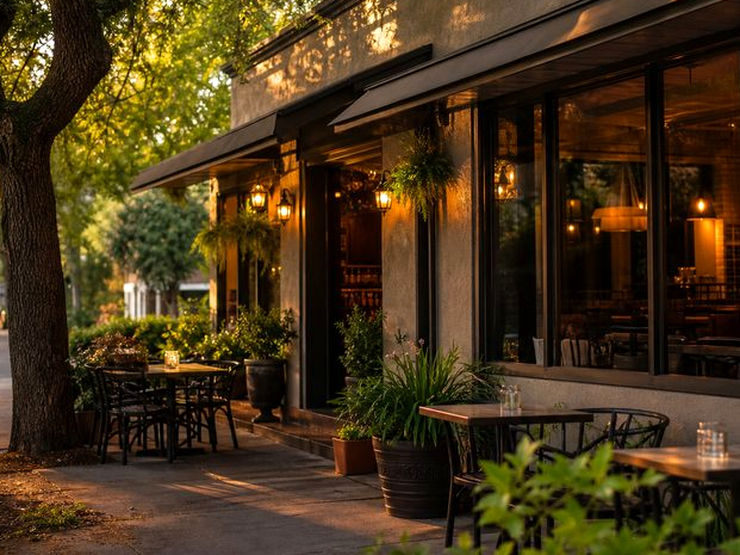
The Bark
Restaurants & Dining
507 All Saints St, Tallahassee, FL 32301, Tallahassee, FL
+1850-900-5936
Vegetarian in Tallahassee.
View profile
Specialty dining in Tallahassee, Riverside, and Mesa stretches from slow-smoke barbecue joints to farm-driven tasting menus.

| Type | Description |
|---|---|
| Barbecue & Smoked Meats | Barbecue restaurants are establishments built around slow-cooked proteins over wood or charcoal, with cook times measured in hours. Brisket, pork ribs, pulled pork, and smoked chicken each finish at a distinct internal temperature that defines the final texture. |
| Farm-to-Table Dining | Farm-to-table restaurants source ingredients from regional farms and ranches rather than national distributors. Menus shift seasonally, which in Riverside and Mesa means rotating around California and Arizona harvests. |
| Brunch & Breakfast Service | Brunch restaurants specialize in morning and midday service, building menus around eggs, pastries, and griddle dishes. Most operate limited hours and close by mid-afternoon. |
| Ethnic & Regional Cuisine | Ethnic restaurants are dining rooms built around the cooking traditions of a specific country or region, using authentic spices and native cooking techniques. Riverside's diverse population supports a wide range of these kitchens, from Tejano and Filipino spots to Middle Eastern bakeries. |
| Craft Cocktail Bars & Gastropubs | Gastropubs are bar-forward restaurants pairing an elevated food menu with a curated beer and cocktail program. Food goes beyond standard bar fare to include charcuterie boards and chef-developed small plates. |
| Catering & Private Event Dining | Catering services bring restaurant-quality meals to private events, corporate gatherings, and weddings. A licensed caterer holds a permit distinct from a standard dine-in license and follows state-mandated food transport and temperature requirements. |
| Fine Dining & Tasting Menus | Fine dining restaurants are formal establishments with prix-fixe or tasting menus, where courses pace over two or more hours. Chefs in these kitchens focus on technique-driven preparations using high-quality proteins and seasonal produce. |
| Vegetarian & Plant-Based Dining | Vegetarian and vegan restaurants are dining rooms that exclude meat, poultry, and seafood entirely. Menus center on seasonal produce, legumes, whole grains, and plant proteins, with many kitchens marking gluten-free or nut-free items clearly. |
Residents in Tallahassee, Riverside, and Mesa choosing a restaurant start with practical checks: hours, menu range, and how the kitchen handles dietary restrictions. Specialty dining adds another layer. A barbecue restaurant earns its reputation through the wood it burns and the time it gives the meat. An ethnic cuisine kitchen earns trust by sourcing authentic ingredients rather than substituting.
Catering deserves a separate review. A licensed caterer in Florida, California, or Arizona holds a permit specific to off-site food service, not just a dine-in license. Confirming that permit before booking a private event protects host and guests alike. Listings here include specialty providers like Midtown Caboose, Backwoods Crossing, and The Bark, giving residents a local starting point across these cities.
Commercial kitchens in specialty restaurants run on six-burner ranges, convection ovens, and commercial refrigeration units. Barbecue spots add offset smokers or rotisserie pits. Fine dining kitchens invest in sous vide immersion circulators and blast chillers for precision cooking.
Restaurants in Florida, California, and Arizona each require a food establishment permit from the relevant state health agency. Liquor service requires a separate license from each state's alcohol control board. Catering operations hold an additional off-site food service permit separate from the dine-in license.
ServSafe Food Manager Certification, issued by the National Restaurant Association Educational Foundation, is the most widely held credential for kitchen managers across all three states. Line-level staff in Florida and Arizona need food handler cards. California requires food handler training under the California Retail Food Code. Health departments in all three states conduct unannounced inspections on a regular schedule.
Chefs at specialty restaurants train at accredited culinary programs. The Culinary Institute of America, Johnson & Wales University, and Le Cordon Bleu graduate chefs who work across American restaurant markets. Community college culinary programs supply a large segment of the local kitchen workforce. The American Culinary Federation offers apprenticeship-based credentialing as an alternative path.
HACCP stands for Hazard Analysis and Critical Control Points. These guidelines govern food temperature tracking, safe storage, and cross-contamination prevention in commercial kitchens. Restaurants log temperatures at critical control points throughout the prep and service day. Front-of-house staff relay guest allergy information to the kitchen before orders reach the line.
Restaurants & Dining
507 All Saints St, Tallahassee, FL 32301, Tallahassee, FL
+1850-900-5936
Vegetarian in Tallahassee.
View profileRestaurants & Dining
1010 W Southern Ave #7, Mesa, AZ 85210, Mesa, AZ
+1480-835-2313
View profileRestaurants & Dining
1406 N Meridian Rd, Tallahassee, FL 32303, Tallahassee, FL
+1850-521-1933
Restaurant in Tallahassee.
View profile
Restaurants & Dining
6725 Mahan Dr, Tallahassee, FL 32308, Tallahassee, FL
+1850-765-3753
Southern in Tallahassee.
View profile
Restaurants & Dining
507 All Saints St, Tallahassee, FL 32301, Tallahassee, FL
+1850-900-5936
Vegetarian in Tallahassee.
View profileRestaurants & Dining
470 Suwannee St, Tallahassee, FL 32301, Tallahassee, FL
+1850-765-9771
American in Tallahassee.
View profileRestaurants & Dining
1327 S Monroe St Suite 5, Tallahassee, FL 32301, Tallahassee, FL
+1448-231-2965
Restaurant in Tallahassee.
View profileRestaurants & Dining
2743 Capital Cir NE #100, Tallahassee, FL 32308, Tallahassee, FL
+1850-900-5969
Peruvian in Tallahassee.
View profileRestaurants & Dining
3203 Mission Inn Avenue, Riverside, CA 92507, Riverside, CA
+1951-620-0004
View profileRestaurants & Dining
3397 Mission Inn Avenue, Riverside, CA 92501, Riverside, CA
+1951-292-7160
View profileRestaurants & Dining
3692 Sunnyside Dr, Riverside, CA 92506, Riverside, CA
+1951-900-0316
View profileRestaurants & Dining
10971 Magnolia Ave, Riverside, CA 92505, Riverside, CA
+1951-729-5555
View profileRestaurants & Dining
5225 Canyon Crest Dr STE 92, Riverside, CA 92507, Riverside, CA
+1951-534-0697
View profileRestaurants & Dining
3605 Market St, Riverside, CA 92501, Riverside, CA
View profileRestaurants & Dining
1526 E Main St, Mesa, AZ 85203, Mesa, AZ
+1480-272-7220
View profileRestaurants & Dining
61 E University Dr, Mesa, AZ 85201, Mesa, AZ
+1480-687-2056
View profileRestaurants & Dining
144 S Mesa Dr #A, Mesa, AZ 85210, Mesa, AZ
+1480-210-3349
View profileRestaurants & Dining
144 N Country Club Dr, Mesa, AZ 85201, Mesa, AZ
+1480-962-1000
View profileRestaurants & Dining
1010 W Southern Ave #7, Mesa, AZ 85210, Mesa, AZ
+1480-835-2313
View profileYes. Florida, California, and Arizona require public access to health inspection records, though the format differs by state. California county health departments assign letter grades posted at the restaurant entrance. Florida's Division of Hotels and Restaurants posts full inspection results online. Arizona's system varies by county, with most counties maintaining searchable inspection records through local health agency websites.
Yes. Catering in Florida, California, and Arizona requires a permit specific to off-site food service, separate from a standard food establishment permit. A caterer operating under only a dine-in license does not meet state requirements for transporting and serving food at off-site locations. Requirements cover temperature control during transport, approved holding equipment, and event-site handling procedures.
ServSafe is a food safety training and certification program administered by the National Restaurant Association Educational Foundation. Restaurants in most states require at least one certified food manager per establishment. The program covers safe food temperatures, cross-contamination prevention, proper storage, and hygiene standards. Managers take a proctored exam to earn the certification, which renews every five years.
Farm-to-table restaurants source produce, proteins, or dairy from identifiable regional farms rather than national broadline distributors. Many name those farms on the menu. Proximity matters: Riverside and Mesa restaurants draw from California and Arizona agricultural zones, while Tallahassee kitchens access North Florida and South Georgia producers. Seasonal availability shapes what lands on the plate.
Barbecue is a low-and-slow cooking method using indirect heat and smoke at temperatures typically below 300 degrees Fahrenheit. Proteins like brisket and pork shoulder cook for hours to break down connective tissue into collagen. Grilling uses direct high heat for fast cooking. The difference shows in texture: slow smoke produces a pull-apart result that high-heat grilling does not replicate.
Restaurants serving alcohol need a liquor license separate from their food establishment permit. Florida, California, and Arizona each issue their own through distinct state agencies. Florida handles licensing through the Division of Alcoholic Beverages and Tobacco. California issues restaurant alcohol licenses through the Department of Alcoholic Beverage Control. Arizona uses the Department of Liquor Licenses and Control. Applications go to the state agency, not a local city office, in most cases.